
Summer holiday weekends in Ohio often bring increased law enforcement activity, including DUI checkpoints aimed at identifying impaired drivers. These checkpoints are typically conducted around high-traffic travel periods such as Memorial Day, Fourth of July, and Labor Day. Understanding how these stops work, what rights drivers have, and how officers operate can make a major difference if you are ever pulled into one in Columbus or surrounding areas.
Sabol Mallory LLC represents individuals facing OVI and DUI-related charges across Columbus, Ohio. Many people are surprised by how quickly a routine holiday drive can turn into a legal issue after passing through a checkpoint. Knowing what to expect can help reduce confusion and protect your rights if you are stopped.
Dan is the first attorney in Ohio to be both board certified in criminal trial law by the National Board of Trial Advocacy and be designated as a Lawyer Scientist by the American Chemical Society. Chase Mallory is a firm founder whom has tried over 40 cases and conducted more than 100 suppression hearings. He is a founding member of the DUI Defense Lawyers Association Kaitlyn O’Hara is a criminal defense lawyer who began her work in the court room long before she attended law school. In her first year as an attorney, she was counsel of record on five jury trials. Meet the lawyers who make up the legal team at Sabol Mallory LLC. Read their individual bios and get to know more about their education, experience and accolades.
Dan Sabol

Chase Mallory

Kaitlyn O'Hara
How DUI checkpoints work in Ohio during summer weekends 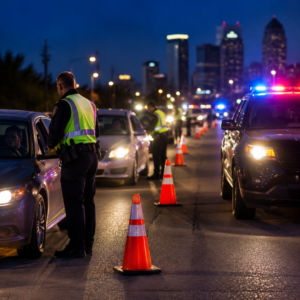
Ohio law enforcement agencies use DUI checkpoints, sometimes called sobriety checkpoints, as a tool to deter impaired driving. These operations are usually planned in advance and placed on roads with higher crash rates or known nightlife traffic. During summer holiday weekends, officers anticipate heavier travel, more social events, and increased alcohol consumption.
Checkpoints are not random stops. They are designed to follow specific procedures to comply with constitutional standards. Officers typically stop vehicles in a predetermined pattern, such as every third or fifth car. This reduces claims of arbitrary enforcement.
At each stop, officers briefly observe drivers for signs of impairment. These signs can include slurred speech, the smell of alcohol, confusion, or visible intoxication. If no issues are observed, the driver is usually allowed to continue without delay.
If officers suspect impairment, the driver may be directed to a secondary screening area for further evaluation.
Why summer holiday weekends see more DUI enforcement
Holiday weekends in Ohio consistently show higher rates of traffic incidents involving alcohol. Memorial Day, Independence Day, and Labor Day are especially active periods for enforcement. Law enforcement agencies increase patrols and coordinate checkpoint locations based on historical crash data and local trends.
In Columbus and Franklin County, police often focus on major routes leaving entertainment districts, highways leading out of the city, and roads connecting suburban areas. The goal is both prevention and early detection of impaired driving.
These enforcement efforts are part of broader public safety initiatives, but they also increase the likelihood that drivers may encounter law enforcement even if they have not engaged in dangerous driving behavior.
Learn what our clients have to say about the work of Sabol Mallory. If you have any questions or need legal help for a criminal charge, please reach out to us right away. Chase Mallory is incredible. He is wonderful to work with and knows exactly what to do to help his clients. Thank you from the bottom of my heart for all you've done for me. I highly recommend hiring Chase to help fight your battles. Bless you! Dan Sabol is probably the best attorney I've ever worked with. Very professional and worked hard to get the best results possible. He will be the first person I call if I need a lawyer again. If you find yourself in a sticky situation make sure you give him a ring. I had the pleasure of working with Dan and Chase and I am very grateful!! They did amazing work to help me on my case. They are very helpful and get back with you in a timely manner whenever I had questions for them, which was very nice and reassuring.Client
Testimonials
What happens when you are stopped at a checkpoint
When a vehicle is stopped, the interaction is usually brief at first. Officers may ask for a driver’s license, registration, and proof of insurance. They may also ask basic questions about where the driver is coming from or whether alcohol has been consumed.
If there are no signs of impairment, the stop ends quickly.
If suspicion arises, the officer may request additional testing. This can include field sobriety tests or a portable breath test. In some cases, the driver may be asked to step out of the vehicle.
Anything observed or said during this stage can become part of a later OVI case. For that reason, many individuals later seek legal guidance after a checkpoint stop.
Legal rights during DUI checkpoints in Ohio
Drivers in Ohio still retain constitutional rights at DUI checkpoints. Officers must follow established procedures, and stops must be conducted in a neutral and non-discriminatory manner.
Drivers generally have the right to remain silent beyond providing identification documents. They are not required to answer detailed questions about alcohol consumption. However, refusing certain chemical tests after an arrest may carry separate administrative penalties under Ohio law.
If a checkpoint stop leads to an arrest, the circumstances of the stop itself can become an important part of a defense strategy. Courts may examine whether the checkpoint was properly authorized and whether officers followed required procedures.
Potential legal consequences after a checkpoint arrest
An OVI charge in Ohio can lead to serious consequences, including license suspension, fines, mandatory classes, and possible jail time depending on prior history or aggravating factors.
A checkpoint arrest does not automatically mean a conviction. Prosecutors must still prove impairment or unlawful blood alcohol concentration. Evidence such as officer observations, test results, and body camera footage can all be challenged.
Legal defense strategies often focus on:
- Whether the checkpoint was properly conducted
- Whether testing procedures were accurate
- Whether officer observations support impairment claims
- Whether constitutional rights were respected
For many individuals, early legal review can significantly affect how a case progresses.
Defending OVI charges in Columbus, Ohio
Defense strategies vary depending on the details of each case. Some cases involve issues with testing equipment, while others focus on whether officers had a valid basis for further detention after the initial checkpoint stop.
A detailed review of the arrest process is often necessary to identify weaknesses in the prosecution’s case.
Drivers facing charges in Columbus often turn to experienced representation. Information on selecting legal counsel can be found here:
https://sabolmallory.com/post/choosing-a-criminal-defense-attorney/
Past case results and recognition can also provide insight into defense experience:
https://sabolmallory.com/post/best-lawyers-selects-daniel-sabol-dui-dwi-lawyer-of-the-year-2020/
Additional context on impaired driving enforcement in Franklin County is available here:
https://sabolmallory.com/post/drunk-driving-crash-calls-attention-to-fatal-wrecks-in-franklin-county/
More general criminal defense resources can be reviewed here:
https://sabolmallory.com/firearm/how-an-ohio-defense-lawyer-can
What drivers should keep in mind during holiday travel
Summer holiday weekends bring increased enforcement, but they also bring heavier traffic and more roadside stops. Staying aware of your surroundings and understanding how checkpoints operate can help reduce stress if you are directed into one.
Drivers who have consumed alcohol should avoid driving altogether. Even small amounts can lead to impairment findings depending on circumstances and officer observations.
If stopped, remaining calm and providing basic required documents is often the most effective approach.
DUI checkpoints in Ohio during summer holiday weekends are a routine enforcement tool used to deter impaired driving and reduce roadway crashes. While they are legal when properly conducted, they can still lead to serious legal consequences for drivers who are stopped and investigated.
Understanding how these checkpoints work, what officers look for, and what rights apply can help drivers make informed decisions if they encounter one in Columbus or anywhere in Ohio.
Sabol Mallory LLC provides defense representation for individuals facing OVI and DUI-related charges and helps clients evaluate the circumstances surrounding checkpoint stops and arrests.
This article is for informational purposes only and is not legal advice. Consult an attorney about your specific situation.


 |
  |