
During high-risk periods such as summer holidays, winter celebrations, and extended weekends, law enforcement agencies across Columbus and central Ohio often increase DUI enforcement efforts. Sabol Mallory LLC emphasizes the importance of understanding the legal framework surrounding these seasonal DUI patrols because drivers frequently face confusion about their rights. Police utilize both stationary checkpoints and mobile patrols to identify impaired drivers. Checkpoints are set up at specific locations for planned inspections, while mobile patrols involve officers actively monitoring traffic and stopping vehicles showing signs of impairment. Both approaches aim to reduce alcohol-related accidents, but the rules governing stops differ significantly depending on the method employed.
Dan is the first attorney in Ohio to be both board certified in criminal trial law by the National Board of Trial Advocacy and be designated as a Lawyer Scientist by the American Chemical Society. Chase Mallory is a firm founder whom has tried over 40 cases and conducted more than 100 suppression hearings. He is a founding member of the DUI Defense Lawyers Association Kaitlyn O’Hara is a criminal defense lawyer who began her work in the court room long before she attended law school. In her first year as an attorney, she was counsel of record on five jury trials. Meet the lawyers who make up the legal team at Sabol Mallory LLC. Read their individual bios and get to know more about their education, experience and accolades.
Dan Sabol

Chase Mallory

Kaitlyn O'Hara
Sobriety Checkpoints: When Probable Cause is Not Required 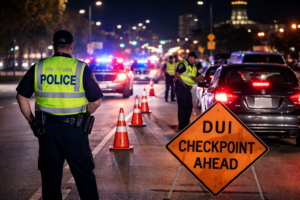
Ohio allows law enforcement to conduct sobriety checkpoints without individualized probable cause, provided strict guidelines are followed. These guidelines include publicly announcing the checkpoint in advance, selecting locations based on DUI-related data and safety considerations, and following a neutral procedure that does not discriminate among drivers. At checkpoints, officers briefly stop vehicles to observe signs of impairment, which may include erratic driving, slurred speech, or the odor of alcohol. Drivers are required to comply with lawful commands at these locations, but the initial stop does not rely on any suspicion that a particular driver is under the influence. Understanding this exception is crucial because many drivers mistakenly believe that every stop by police must meet the probable cause standard.
Reasonable Suspicion and Probable Cause in Mobile Patrols
Mobile DUI patrols operate differently. Officers driving designated areas may observe vehicles exhibiting signs of impairment, including swerving, speeding, or failure to follow traffic signals. In these cases, they must have reasonable suspicion to initiate a traffic stop. Reasonable suspicion is a lower threshold than probable cause and allows officers to investigate potential violations. Once the officer develops probable cause—through field sobriety testing, the smell of alcohol, visible impairment, or breathalyzer results—they are legally justified in making a DUI arrest. This distinction between reasonable suspicion and probable cause ensures that drivers are protected from arbitrary stops while allowing law enforcement to enforce DUI laws effectively.
Common Misconceptions About DUI Enforcement
Many drivers assume that all interactions with police during DUI patrols require probable cause. This misunderstanding can lead to unnecessary fear and missteps during a traffic stop. The reality is that checkpoint stops do not require probable cause, while mobile patrol stops require reasonable suspicion prior to detention. Additionally, consent to certain tests, such as field sobriety tests, is voluntary unless legal obligations arise after probable cause is established. Drivers who understand these distinctions are better positioned to protect their rights and respond appropriately during encounters with law enforcement.
Learn what our clients have to say about the work of Sabol Mallory. If you have any questions or need legal help for a criminal charge, please reach out to us right away. Chase Mallory is incredible. He is wonderful to work with and knows exactly what to do to help his clients. Thank you from the bottom of my heart for all you've done for me. I highly recommend hiring Chase to help fight your battles. Bless you! Dan Sabol is probably the best attorney I've ever worked with. Very professional and worked hard to get the best results possible. He will be the first person I call if I need a lawyer again. If you find yourself in a sticky situation make sure you give him a ring. I had the pleasure of working with Dan and Chase and I am very grateful!! They did amazing work to help me on my case. They are very helpful and get back with you in a timely manner whenever I had questions for them, which was very nice and reassuring.Client
Testimonials
Rights of Drivers During DUI Stops
Ohio law protects drivers from unlawful searches and detentions. Individuals stopped during patrols should remain calm, provide requested documentation such as driver’s license and registration, and avoid volunteering information beyond what is legally required. Knowing your rights can prevent inadvertent self-incrimination and reduce the likelihood of facing harsher penalties. For example, refusing field sobriety tests before probable cause exists is permitted, but refusal after probable cause can carry legal consequences. Consulting with an experienced attorney, such as those at Sabol Mallory LLC, can clarify the options available and help drivers navigate these complex legal situations.
How Sabol Mallory LLC Defends Against Improper DUI Charges
Experienced Columbus DUI attorneys can assess whether a stop or checkpoint complied with Ohio law. Potential defenses include challenging the legality of checkpoint procedures, questioning whether reasonable suspicion existed for a mobile stop, and scrutinizing the establishment of probable cause before an arrest. Legal counsel can also review the accuracy and administration of breathalyzer or chemical tests. For drivers facing commercial license (CDL) DUI charges, representation is critical because these cases carry more severe penalties, including mandatory reporting to the Department of Transportation and potential disqualification from driving commercially. Sabol Mallory LLC has extensive experience representing clients in these high-stakes situations, helping preserve driving privileges and navigate complex Ohio DUI statutes.
The Process of a DUI Stop in Columbus
When an officer initiates a traffic stop, the interaction typically follows a sequence: observation of impaired driving, the stop itself, initial questioning, and testing for intoxication. At each stage, adherence to legal standards is essential. For example, an officer must have observed behaviors supporting reasonable suspicion before stopping a vehicle on a mobile patrol. Any misstep—such as stopping a vehicle without reasonable suspicion or failing to follow checkpoint protocols—can be challenged in court. Additionally, officers must read implied consent warnings when administering chemical tests; failure to do so can result in suppression of test results. Proper representation ensures these procedural safeguards are enforced.
Practical Tips for Drivers During DUI Patrols
- Remain polite and calm when interacting with officers.
- Keep your license, registration, and insurance readily available.
- Understand that you may refuse certain tests before probable cause exists.
- Consult a DUI attorney early, even if you have not been arrested, to assess potential exposure and rights.
- Avoid voluntary admissions of alcohol consumption or impairment.
Impact of a DUI Conviction in Ohio
A DUI conviction can carry severe consequences, including fines, license suspension, increased insurance rates, and criminal records. First-time offenders may face probation, alcohol education programs, and limited driving privileges, while repeat offenders face enhanced penalties. For commercial drivers, a single DUI can jeopardize employment and federal licensing requirements. Legal defenses can mitigate or prevent these outcomes, particularly when procedural errors or lack of probable cause are present.
Key Takeaways on Seasonal DUI Patrols
- Sobriety checkpoints are legal and do not require individualized probable cause but must follow state rules.
- Mobile DUI patrol stops require reasonable suspicion; probable cause is needed for arrests.
- Knowing your rights and understanding the legal framework can prevent unnecessary penalties.
- Engaging an experienced DUI attorney in Columbus can safeguard your driving privileges and ensure proper legal procedure is followed.
- Early consultation with a firm like Sabol Mallory LLC provides strategic guidance and defense planning.
Protecting Your Rights in Columbus, Ohio
Ohio drivers should understand both the limits of law enforcement authority and the protections available under state and federal law. Seasonal DUI patrols are intended to promote safety, but drivers still have rights that can be exercised to prevent unlawful detention or arrest. Consulting Sabol Mallory LLC ensures professional guidance, thorough evaluation of each stop, and advocacy for the best possible outcome. Experienced DUI lawyers can challenge improper stops, test results, or procedural errors to minimize legal and personal consequences.
If you or a family member are stopped during a DUI patrol or face an OVI charge in Columbus, Ohio, Sabol Mallory LLC offers comprehensive, strategic defense to protect your rights, license, and future. Schedule a free consultation to understand your options and ensure proper legal representation.
To learn more about this subject click here: Why Breathalyzer Accuracy Drops in Cold Weather


 |
  |